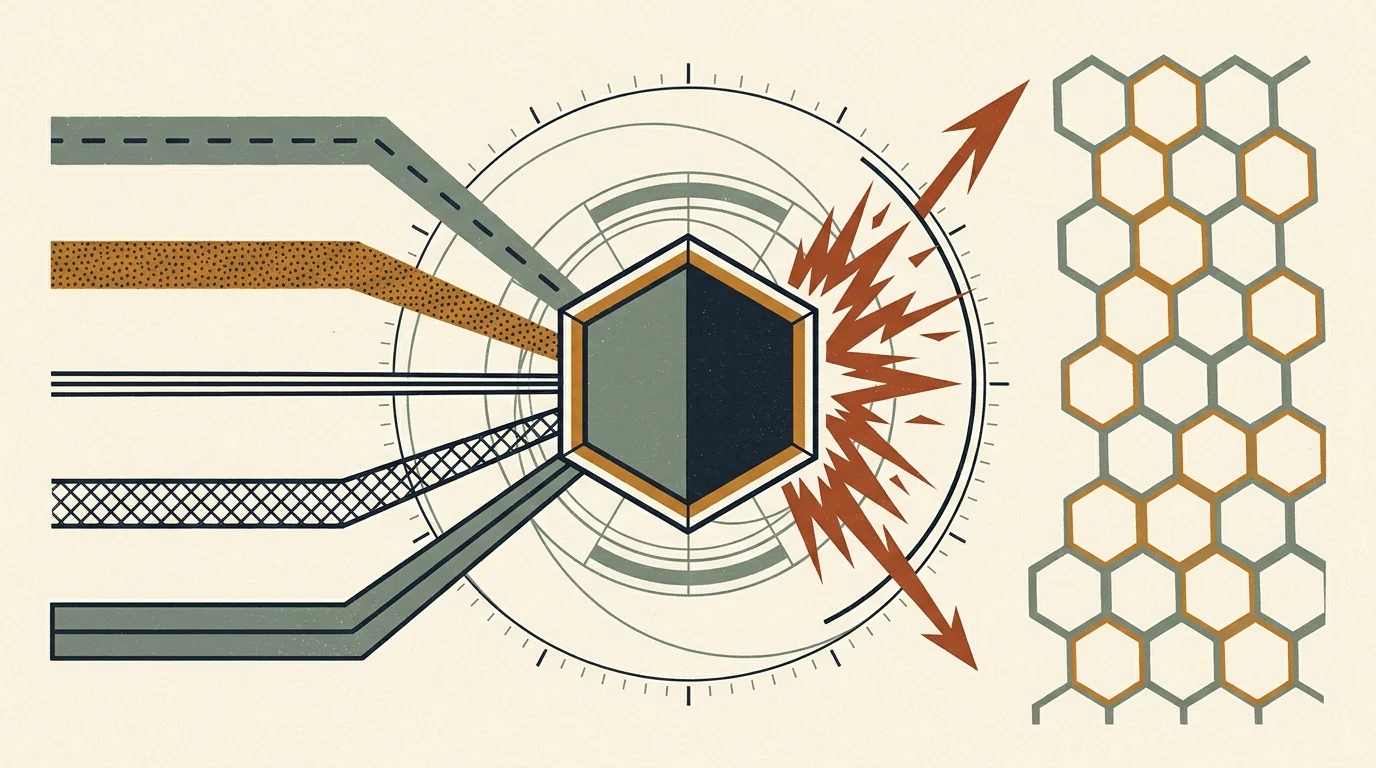
Five separate interventions that extend lifespan in mice all upregulate the exact same protective antioxidant, revealing a unified biochemical target beneath diverse anti-aging strategies.
The search for a unified aging mechanism
Aging manifests across tissues as a progressive accumulation of molecular damage that drives systemic failure, from neurodegeneration to cardiovascular decline. For decades, biophysicists debated whether this deterioration stems from random, wear-and-tear erosion or the gradual breakdown of finely tuned cellular maintenance programs. The persistent challenge in geroscience lies in explaining why vastly different interventions, ranging from dietary restriction to pharmacological compounds, often yield similar systemic benefits.
Rather than acting on isolated pathways, researchers suspect that disparate longevity treatments might trigger a shared physiological response. If diverse therapies ultimately converge on a single intracellular protector, it suggests that aging is governed by common redox bottlenecks rather than an uncoordinated cascade of failures.
Tracing convergence across experimental models
To test whether distinct anti-aging protocols share a common biochemical denominator, investigators examine molecular profiles across multiple lifespan-extending paradigms in murine models. By comparing transcriptomic and proteomic shifts induced by varied treatments, scientists track which intracellular defense systems consistently light up across the board.
The resulting data demonstrate that five distinct lifespan-extending regimens all drive a significant upregulation of the exact same antioxidant molecule within target tissues. This surprising biochemical convergence shifts the focus from how different treatments uniquely alter metabolism to how they universally fortify the cell against oxidative stress.
Redox thresholds and cellular protection
In 1956, Denham Harman proposed the free radical theory of aging, suggesting that reactive oxygen species drive cumulative cellular deterioration over time. While early biophysical models viewed these molecules as destructive shrapnel that indiscriminately erodes macromolecules, modern physiology reveals a more precise reality where oxidants also act as vital signaling nodes.
When lifespan-extending treatments boost this specific antioxidant, they do not merely act as blunt chemical sponges. Instead, they calibrate the local redox environment to prevent the oxidative inactivation of key metabolic enzymes while preserving the nuclear translocation of stress-defense transcription factors that maintain tissue resilience.
Mapping boundaries and future directions
While this biochemical convergence offers a compelling framework for understanding systemic healthspan extension, translating these murine observations into human therapies remains an open challenge. Animal models provide controlled environments that rarely capture the environmental and genetic heterogeneity of human populations.
Future investigations must determine whether human tissues exhibit a similar convergent antioxidant response to analogous interventions or if primate physiology requires different regulatory thresholds. Establishing whether this shared molecular upregulation is merely correlative or strictly necessary for lifespan extension will dictate the trajectory of upcoming geroscience therapeutics.
Key takeaways
- Five distinct lifespan-extending treatments in mice consistently upregulate a single, shared protective antioxidant.
- This biochemical convergence bridges historical free radical theories with contemporary models of cellular stress signaling.
- Targeting shared redox thresholds may explain how diverse anti-aging interventions simultaneously influence multiple age-related diseases.
Source
Reported from Five lifespan-extending treatments boost the same antioxidant in mice (Medical Xpress Healthy Aging).
Evidence note: The source text is a high-level news summary lacking specific experimental methodologies, quantitative expression data, or direct mechanistic validation from primary research papers.