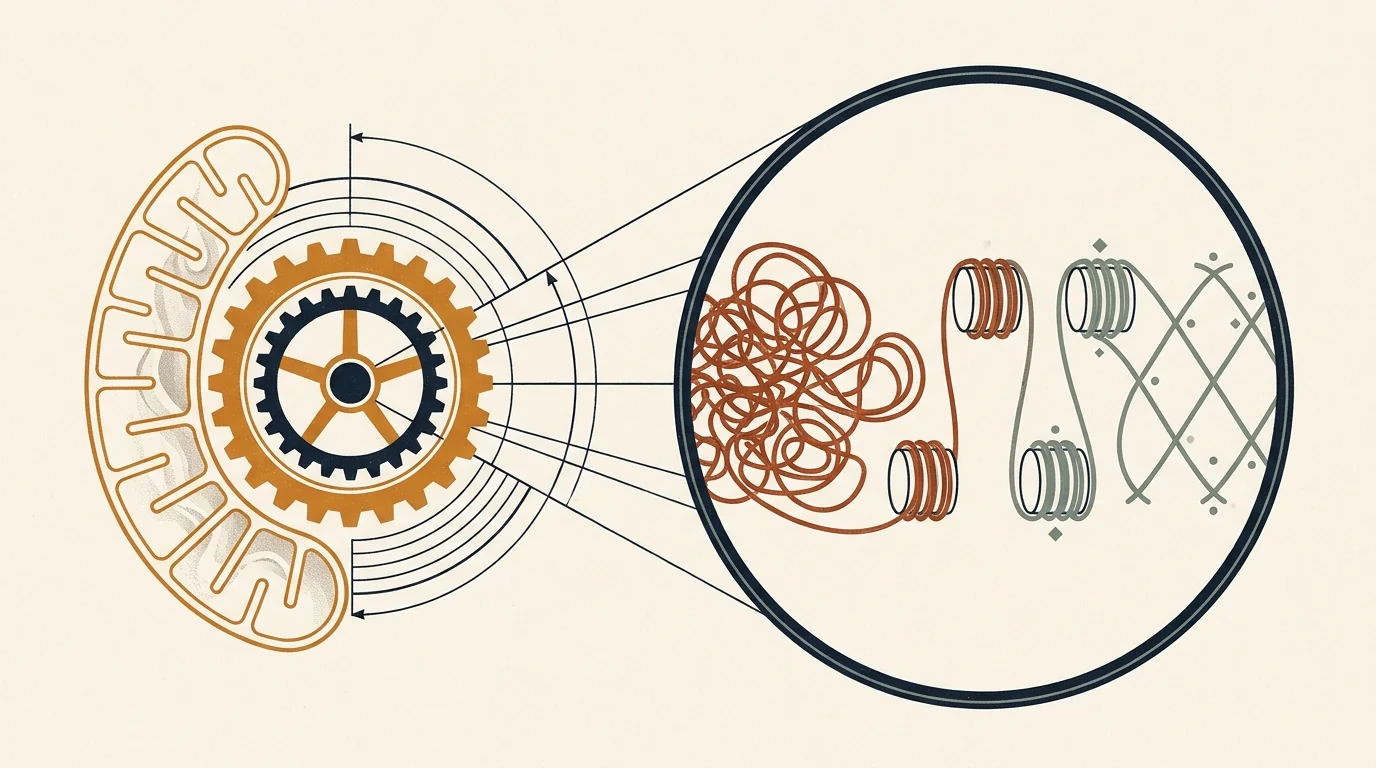
A systematic review shows how caloric restriction resets histone tags and DNA methylation in rodent neurons, revealing how metabolic signals physically alter genetic memory.
The search for chromatin stability in aging neurons
As brain cells age, the physical packaging of their genetic material unravels. Long-lived neurons rarely replace their genomic DNA. Instead, they rely on small chemical tags, such as methyl groups attached to cytosine bases and acetyl groups fixed to histone tails, to control which genes remain readable and which stay locked away. Over a lifespan, this control panel breaks down through epigenetic drift. Chromatin, the dense spool of proteins and DNA that fits the genome into a microscopic nucleus, loosens unpredictably in aging brain tissue. This structural decay allows baseline inflammatory genes to fire while switching off protective neural networks.
Limiting food intake delays age-related decline, a phenomenon Clive McCay first observed in rodents in 1935. Yet how simple food deprivation sends physical signals into the central nervous system has remained unclear. Biologists have struggled to map the physical chain of events connecting an empty stomach to the microscopic interior of a neuron’s nucleus, where metabolic shifts must somehow lock down genomic structure.
Mapping nine animal studies of brain epigenetic change
To trace this pathway, researchers conducted a systematic review following PRISMA 2020 and SWiM guidelines, searching PubMed and SciSpace through December 2025. Out of 863 initial papers, nine preclinical animal studies met the selection criteria. Zero human studies qualified, highlighting that direct measurements of living human brain epigenetics under fasting conditions remain unrecorded in published clinical literature.
Across the rodent experiments, feeding schedules varied from 16-hour daily fasting to alternate-day starvation and long-term caloric restriction. Despite these differences, the studies consistently showed that cutting energy intake reshapes three distinct layers of neural genomic control: DNA methylation marks, post-translational histone modifications, and non-coding RNA expression. These structural resets occurred most clearly in the hippocampus, the memory center most vulnerable to age-related decay.
How circulating energy metabolites rewrite neural chromatin
The bridge between diet and neural DNA relies on energy metabolites that act as fuel for epigenetic enzymes. When food stops arriving, the body stops burning glucose and turns to fat, flooding the bloodstream with ketone bodies like beta-hydroxybutyrate. This metabolic switch alters internal energy ratios, boosting pools of free nicotinamide adenine dinucleotide (NAD+) inside brain cells. Extra NAD+ activates Sirtuin-1 (SIRT1), an enzyme that strips acetyl groups off histone tails, winding chromatin back into tight, compact spools while tuning downstream CREB transcription factors.
At the same time, accumulated beta-hydroxybutyrate blocks histone deacetylase (HDAC) enzymes. By preventing HDACs from removing acetyl marks near specific gene promoters, fasting keeps chromatin open and accessible around key growth signals, including brain-derived neurotrophic factor (BDNF) and its primary receptor, TrkB. Related signals, such as the suppression of nutrient-sensing mTOR alongside the activation of AMPK and FOXO networks, further direct DNA methyltransferases and TET demethylation enzymes. Together, these coordinated chemical steps arrest age-related chromatin drift and stabilize baseline genetic control in animal brain cells.
Translational barriers and the limits of preclinical evidence
While these preclinical trials link fasting protocols to recalibrated neural epigenetics and sharper performance in rodent memory tests, sharp methodological limits prevent applying the findings to human health. Risk-of-bias scoring via the SYRCLE tool judged seven of the nine studies as high risk and two as moderate risk, largely because authors failed to report random sequence generation, allocation concealment, caregiver blinding, or pre-registered trial protocols.
Current evidence relies heavily on loose correlations between chemical tags and behavioral tests in small animal cohorts. Proving true molecular cause and effect requires precise epigenome editing to alter specific histone marks or methyl groups without changing an animal’s diet. Until researchers combine multi-omics tools with standardized human biospecimens, these preclinical data offer a blue-collar blueprint for rodent neurobiology rather than a proven therapy for the human brain.
Key takeaways
- A systematic review of nine animal studies shows dietary restriction alters brain DNA methylation, histone tags, and non-coding RNAs.
- Fasting elevates ketone bodies and NAD+, activating SIRT1 and BDNF/TrkB pathways to stabilize hippocampal chromatin structure.
- Methodological bias in all nine rodent trials and a total lack of human data currently limit clinical translation.
Source
Reported from Epigenetic modification of neurotransmitter pathways during fasting: a systematic review (Frontiers in Human Neuroscience).
Evidence note: This evidence relies entirely on nine preclinical animal studies with high methodological heterogeneity and risk of bias, lacking any human experimental data.