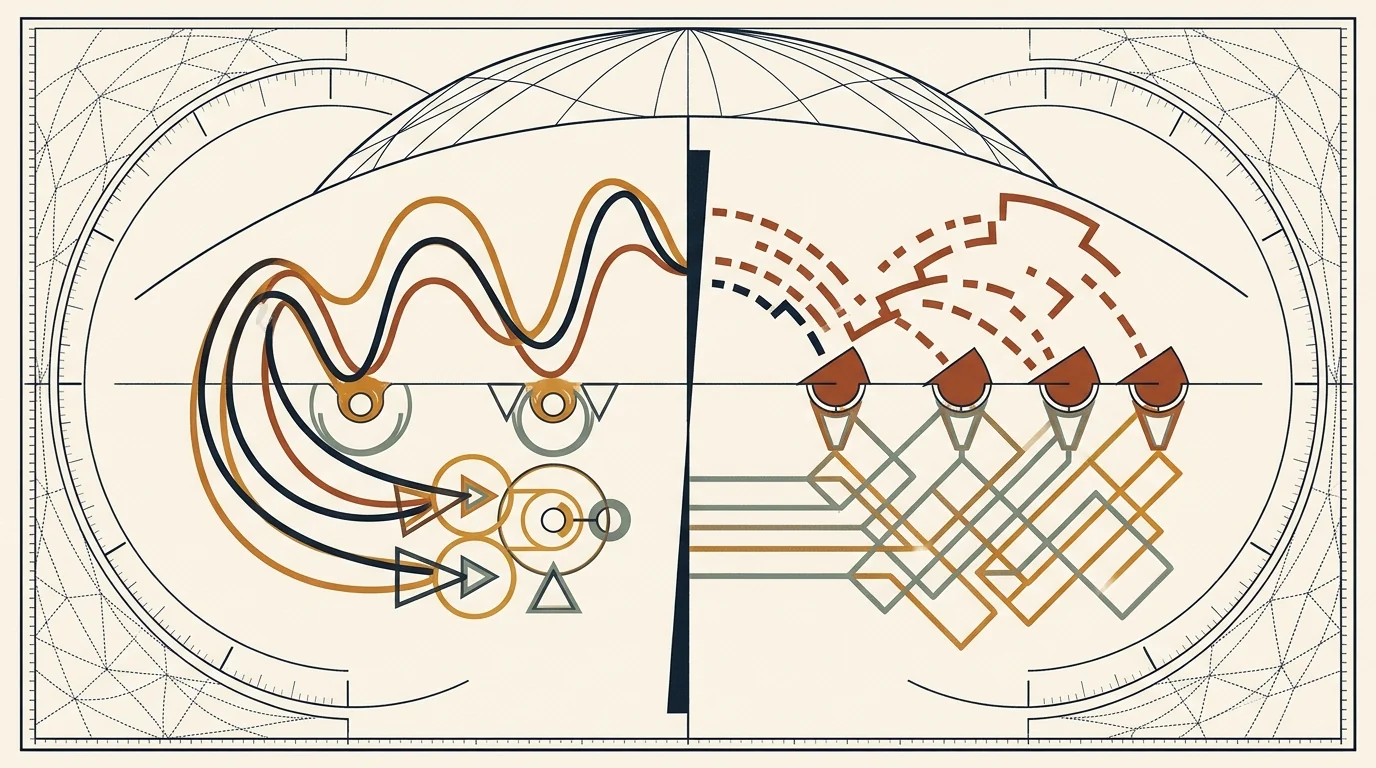
Blocking muscarinic receptors in neurosurgical patients revealed that low-frequency brain waves lock in new neural patterns but become redundant during recall.
A long-standing debate over brain rhythm functions
For decades, neuroscientists tracking memory formation have debated how the hippocampus balances two opposite tasks: capturing incoming sensory noise and retrieving recorded experiences without cross-contamination. Computational models formulated by Michael Hasselmo suggested that acetylcholine acts as a physiological switch. High levels of this neurotransmitter were thought to promote encoding by dampening internal feedback loops, while low levels allowed internal retrieval circuits to dominate. Within this framework, slow theta oscillations—rhythmic electrical pulses beating two to four times per second—were widely viewed as the essential pacing mechanism for both reading and writing memories.
Yet proving whether these rhythmic waves actively govern human memory retrieval or merely reflect background network activity required a precise intervention. Scientists needed a way to selectively disable cholinergic signaling while directly recording electrical currents within the living human hippocampus during memory tasks.
Scopolamine selectively disrupts encoding while sparing retrieval
To resolve this dynamic, researchers administered scopolamine, a muscarinic cholinergic antagonist, to neurosurgical patients who had intracranial electrodes temporarily implanted for clinical evaluation. While undergoing intracranial electrophysiology recordings, the participants performed an associative recognition memory task designed to test their ability to bind distinct pieces of information together and recall them later.
The trial revealed a sharp division in how memory systems respond to chemical intervention. When scopolamine flooded muscarinic receptors while patients were initially learning pairs of items, their recollection-based memory suffered significantly. However, when the drug was administered only during the retrieval phase, the patients retrieved their previously formed memories without any measurable drop in accuracy.
How low-frequency wave collapses alter memory binding
Intracranial recordings provided a direct look at the physical changes occurring within the deep tissue of the hippocampus. Scopolamine triggered dose-dependent reductions in slow theta power, disrupted theta phase resets, and degraded the precise electrical pattern reinstatement that typically links an encoding event to its retrieval.
These wave dynamics explain why encoding is exceptionally vulnerable to cholinergic blockade. High acetylcholine tone organizes hippocampal networks into a coherent, low-frequency phase-reset state, acting like a master clock that aligns synaptic inputs to build lasting physical connections. Blocking muscarinic receptors prevents the network from establishing this coordinated rhythm. Strikingly, once those structural traces are established, the brain can navigate its neural wiring to pull up stored information even when the slow theta rhythm is completely disrupted.
Reframing acetylcholine targets in memory disorders
These findings challenge the traditional view that theta oscillations are strictly necessary for every stage of memory processing. Instead, they demonstrate that slow theta reflects a dedicated encoding state. In practical terms, this distinction refines how neuroscientists interpret brain-wave biomarkers in neurodegenerative conditions like Alzheimer’s disease, where cholinergic decline is a core feature of cognitive failure.
If rhythmic theta waves primarily serve to write new information rather than read existing circuits, future therapeutic strategies can focus more precisely on stabilizing encoding networks. Interventions aimed at restoring cholinergic tone or pacing rhythmic biomarkers may prove most effective when targeted at early learning processes, rather than trying to restore late-stage retrieval dynamics.
Key takeaways
- Scopolamine suppressed human hippocampal slow theta oscillations (2–4 Hz) during both the encoding and retrieval phases of memory.
- Muscarinic blockade during initial learning impaired recollection, whereas blockade during retrieval left recall performance intact.
- The findings show slow theta waves drive the physical assembly of memory traces rather than their subsequent readout.
Source
Reported from Cholinergic blockade reveals a role for human hippocampal theta in memory encoding but not retrieval (eLife Neuroscience).
Evidence note: This study was conducted in a small clinical cohort of neurosurgical patients evaluated with intracranial electrodes, which may not fully reflect healthy brain physiology.