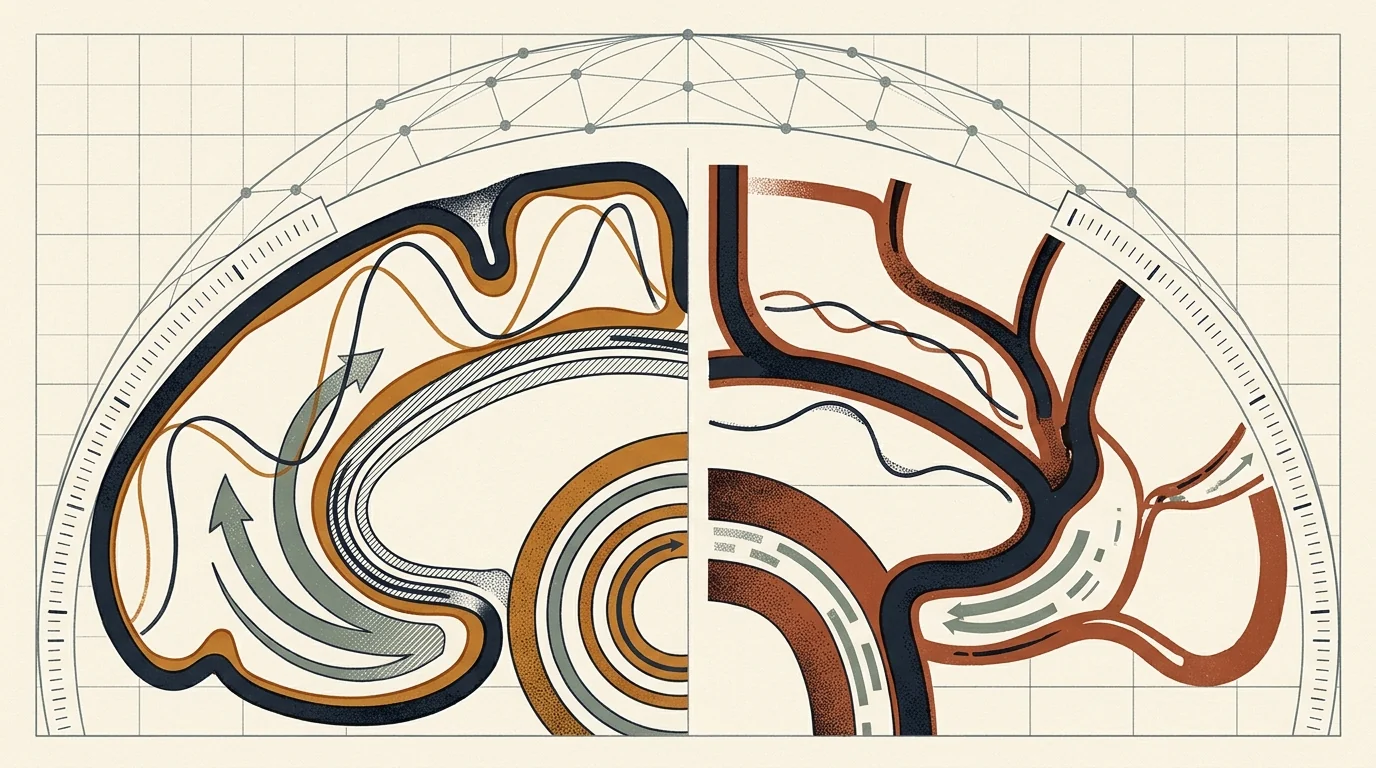
Simultaneous brain imaging shows older adults lose the neural slow waves and vascular contractions that pump fluid through the brain during deep sleep.
During deep non-rapid eye movement (NREM) sleep, the brain reorganizes its electrical activity into synchronized, low-frequency electrical waves. In healthy young adults, these electrical surges trigger periodic constrictions in cerebral blood vessels. Because the skull forms a rigid container, every sudden drop in local blood volume creates a mechanical vacuum, drawing rhythmic, large-amplitude waves of cerebrospinal fluid into the brain tissue. In a study published in Nature Aging, researchers used accelerated functional MRI and simultaneous electroencephalography to track this fluid pump in 31 young adults and 41 older adults. They found that older brains exhibit a marked dampening of these nightly fluid waves, driven by a dual collapse in neural slow-wave power and blood-vessel responsiveness.
This mechanical breakdown occurred in older adults even before any clinical signs of cognitive impairment or neurodegenerative disease appeared. When the researchers monitored gray matter dynamics, they discovered that age-related blood-vessel stiffening impaired the vessel’s ability to contract in step with neural signals, decoupling cerebral blood volume shifts from fluid movement. While this imaging reveals how physical fluid dynamics stall in aging brains, the study measured real-time signal dynamics rather than long-term disease outcomes, and these brain-signal proxies do not reflect tissue-specific metabolic processes, joint cartilage integrity, or peripheral cellular repair.
Key takeaways
- Neural slow waves during sleep drive low-frequency vascular contractions that mechanically pump cerebrospinal fluid through brain tissue.
- Older adults exhibit significantly reduced fluid flow waves in NREM sleep due to diminished electrical power and stiffened cerebral vessels.
- This age-related loss of fluid propulsion occurs in healthy individuals prior to the onset of diagnosed neurodegenerative disease.
Source
Reported from The aging human brain exhibits reduced hemodynamic and cerebrospinal fluid flow waves during sleep (Nature Aging).
Evidence note: Because fluid dynamics were imaged during short, laboratory sleep transitions rather than full-night natural sleep, the measurements reflect real-time physical dynamics rather than long-term clinical health outcomes.