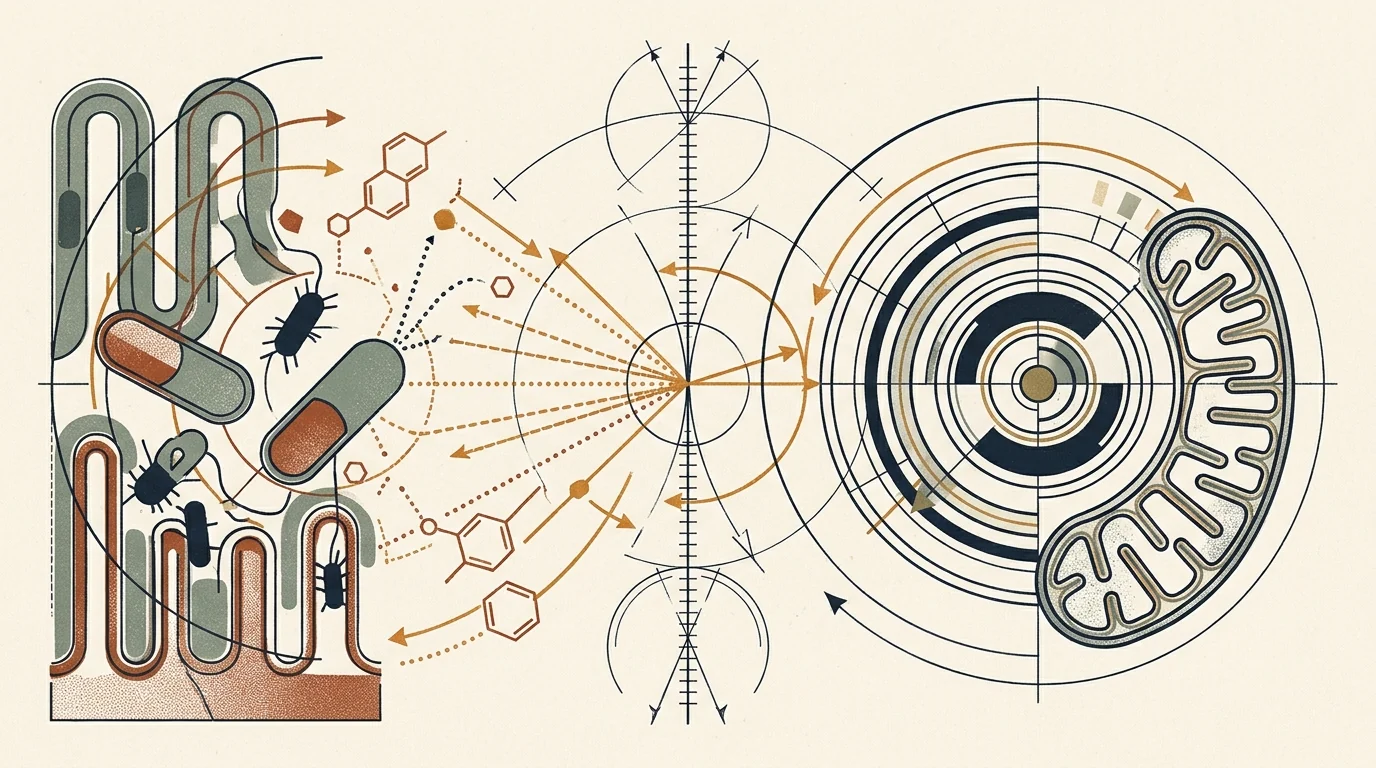
UC San Diego researchers tracked the small-molecule outputs of human centenarian gut microbes and used engineered bacteria to reverse metabolic decay in aged mice.
The longevity paradox inside the human gut
Human longevity has long posed a biological puzzle. While the cellular machinery of most mammals predictably degrades over time, individuals who reach exceptional ages often retain robust metabolic stability, clearing blood sugar efficiently and resisting systemic insulin resistance well into their tenth decade.
For over a century, scientists have suspected that the dense ecosystem of trillions of microbes inhabiting the large intestine plays a role in this resistance. In 1907, microbiologist Élie Metchnikoff proposed that toxic bacterial byproducts drive age-related physical decline, suggesting that altering the gut’s microscopic flora could preserve human vigor. Modern high-throughput sequencing has transformed this hypothesis into a precise biochemical search, shifting focus from which microbes reside in the colon to what metabolic factories they operate.
The fundamental challenge lies in distinguishing whether the distinct microbiome of a centenarian is merely a passive byproduct of a healthy lifestyle or an active driver of cellular resilience. Isolating the specific chemical outputs that separate ordinary aging from exceptional healthspan remains one of the central frontiers of longevity science.
Decoding centenarian microbial signals
To answer this question, researchers at the University of California San Diego analyzed the metabolic activity of the gut microbiome in humans who achieved exceptional longevity. Rather than simply cataloging bacterial species, the team evaluated the active chemical pathways and small-molecule metabolites secreted by these microbial communities.
The investigators identified distinct shifts in microbial metabolic output that correlated directly with human centenarians. To test whether these chemical signatures actively drove host youthfulness, the researchers engineered host bacteria to overproduce the exact metabolites observed in the long-lived humans and introduced them into aged mice.
The intervention produced measurable systemic changes. Aged mice receiving the engineered bacteria showed restored metabolic health, demonstrating that specific microbial chemical signals can actively alter host physiological function across species boundaries.
How microbial chemistry modulates host biology
The gut microbiome functions as an endocrine-like organ, converting dietary molecules into bioavailable signals. These microbial metabolites cross the single-cell layer of the intestinal lining and enter the bloodstream, where they dock onto specific cell-surface receptors and nuclear transcription factors across peripheral tissues.
In the aging mammal, skeletal muscle and liver tissue grow deaf to insulin as inflammatory proteins and cellular debris clutter downstream signaling pathways. The engineered bacterial strains overproduced target metabolites that appear to flush these clogged circuits, accelerating energy substrate clearance and stabilizing blood sugar handling.
While this study highlights a functional bridge between bacterial secretion and host tissue performance, the precise molecular receptors and detailed signaling cascades activated by these specific metabolites remain to be fully mapped in human tissues.
Boundaries and the path to synthetic therapeutics
These findings establish a proof-of-concept for live biotherapeutic products, proving that synthetic biology can harness centenarian biochemistry to reverse aspects of mammalian metabolic decay. However, translating these rodent results into human medicine requires navigating significant biological hurdles.
Engineered microbes must successfully colonize an established, competitive human gut ecosystem without causing opportunistic infections, swapping genes with native species, or disrupting surrounding metabolic pathways. Moreover, mouse models do not fully replicate the complex, decades-long interactions between human genetics, varied diets, and intestinal immunity.
Until clinical trials establish safety, dosage, and efficacy, these findings do not justify attempting to modify the gut microbiome with commercial probiotics or unproven dietary regimens. Future research must identify the exact molecular structures of the centenarian metabolites to determine whether direct pharmaceutical administration or engineered bacterial delivery offers the safest route toward extending human healthspan.
Key takeaways
- Researchers linked specific gut microbial metabolic outputs to exceptional human longevity.
- Engineered bacteria overproducing these longevity-associated metabolites restored youthful glucose handling in aged mice.
- Translating these rodent findings into human biotherapeutics requires rigorous clinical testing to ensure colonization and safety.
Source
Reported from Gut microbiome activity linked to exceptional longevity may support healthier aging (Medical Xpress Healthy Aging).
Evidence note: This research paired observational human microbiome data with an engineered bacterial intervention in mice, which may not replicate human tissue responses.