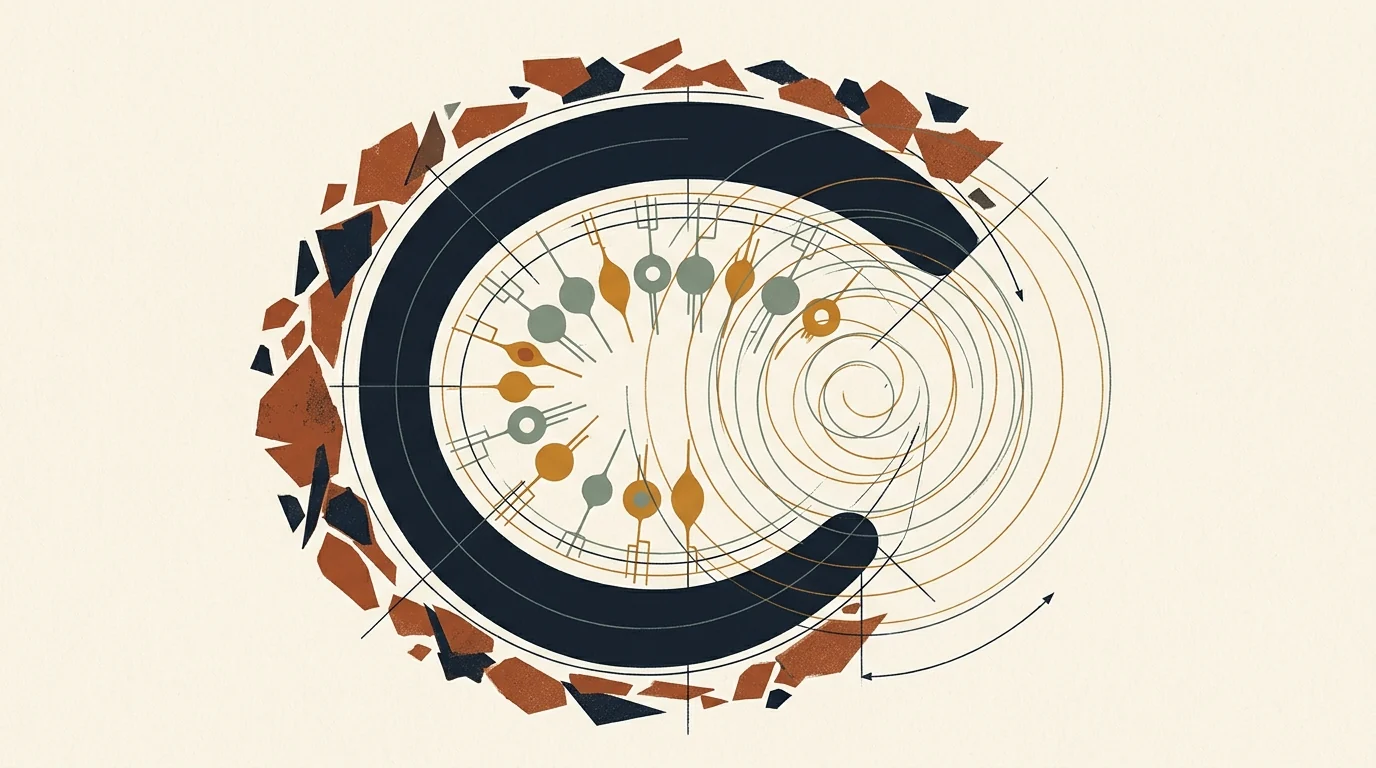
In post-mortem tissue past age 80, rare immature hippocampal neurons preserve memory not by replacing lost cells, but by quieting local brain inflammation.
The puzzle of plaque-heavy yet lucid brains
Roughly three in ten older adults whose brains show dense amyloid-beta plaques and tangled tau proteins at autopsy never experienced dementia during life. Ever since David Snowdon’s 1997 Nun Study documented sisters who stayed mentally agile despite severe Alzheimer’s pathology, neurobiologists have hunted for the cellular buffer separating physical plaque buildup from actual memory loss.
If misfolded proteins alone destroyed cognition in a straight line, those resilient donors should have lost episodic memory years before death. Instead, their neural circuits continued firing cleanly inside tissue crowded with lesions that devastate other patients.
Researchers at the Netherlands Institute for Neuroscience set out to test whether the adult hippocampus, the seahorse-shaped hub for forming new memories, keeps a specialized population of young, adaptable cells active past age 80, and whether those cells behave differently in people who resist dementia.
Counting and sequencing rare hippocampal cells
Drawing on donated tissue from the Netherlands Brain Bank, the team compared three groups of older adults averaging past 80 years of age: cognitively healthy donors without Alzheimer’s lesions, patients who died with clinical Alzheimer’s dementia, and resilient donors carrying heavy plaque and tangle loads alongside intact cognition. Their search focused on the dentate gyrus, a hippocampal gateway where newborn neurons continue maturing into adulthood.
Because immature neurons represent a tiny fraction of adult brain cells, standard bulk tissue assays easily miss them. Using single-cell RNA sequencing to read gene activity inside individual nuclei, the researchers isolated these rare immature neurons across all three groups and first asked a straightforward counting question: do resilient brains simply hold more young replacement neurons?
The answer was no. Resilient donors and Alzheimer’s dementia patients carried comparable numbers of immature dentate gyrus neurons. What separated sharp minds from failing ones was not how many young cells survived, but which genetic programs those cells switched on under stress.
Neighborhood caretakers rather than spare parts
Inside resilient brains, immature neurons dialed up coordinated survival, heat-shock, and stress-response genes while sharply turning down pro-inflammatory and cell-death pathways. In donors who developed dementia, that protective transcriptional shift was blunted, leaving immature cells vulnerable to the surrounding inflammatory storm.
That distinction recasts what young neurons actually do in an eighty-year-old hippocampus. Rather than wiring in one by one as structural replacements for dead cells, resilient immature neurons act like neighborhood peacekeepers: by muting inflammatory signals and releasing trophic support into the surrounding tissue, they calm nearby microglia and shield established mature synapses from secondary metabolic damage.
When chronic inflammation takes hold in the hippocampus, neighboring glia strip away working synapses and starve nearby mitochondria of steady energy flow. Keeping a small reserve of young cells in a low-inflammation, pro-survival state appears to break that cascade before mature memory circuits unravel.
Where plaque-heavy brains bend the rules of Alzheimer’s
Because single-cell sequencing of brain-bank tissue captures a single post-mortem snapshot, it cannot prove whether this anti-inflammatory gene program actively prevented dementia over decades or survived as a consequence of healthier surrounding circuits. Living organoid and animal models will be needed to watch immature human neurons signal to mature neighbors in real time and test whether switching on those same gene networks rescues synaptic signaling.
Even with that boundary, the finding challenges drug strategies centered solely on scrubbing away amyloid plaques after symptoms appear. If cognitive survival depends on how local hippocampal cells regulate inflammation around existing plaques, therapies designed to coax resident immature neurons into their protective state could preserve memory even in brains where protein buildup is already underway.
Key takeaways
- Immature neurons persist in the human hippocampus past age 80 across healthy, demented, and cognitively resilient brains alike.
- Resilient donors did not carry more immature neurons; instead, their young cells activated stress-survival genes and muted inflammatory pathways.
- Protecting memory in plaque-heavy brains may depend more on quieting local tissue inflammation than on replacing lost neurons one for one.
Source
Reported from Scientists discover a surprising clue to why some brains resist Alzheimer’s (ScienceDaily Healthy Aging).
Evidence note: Post-mortem single-cell RNA profiling captures gene-activity correlations at a single point in time and cannot directly prove temporal causation in living human brains.