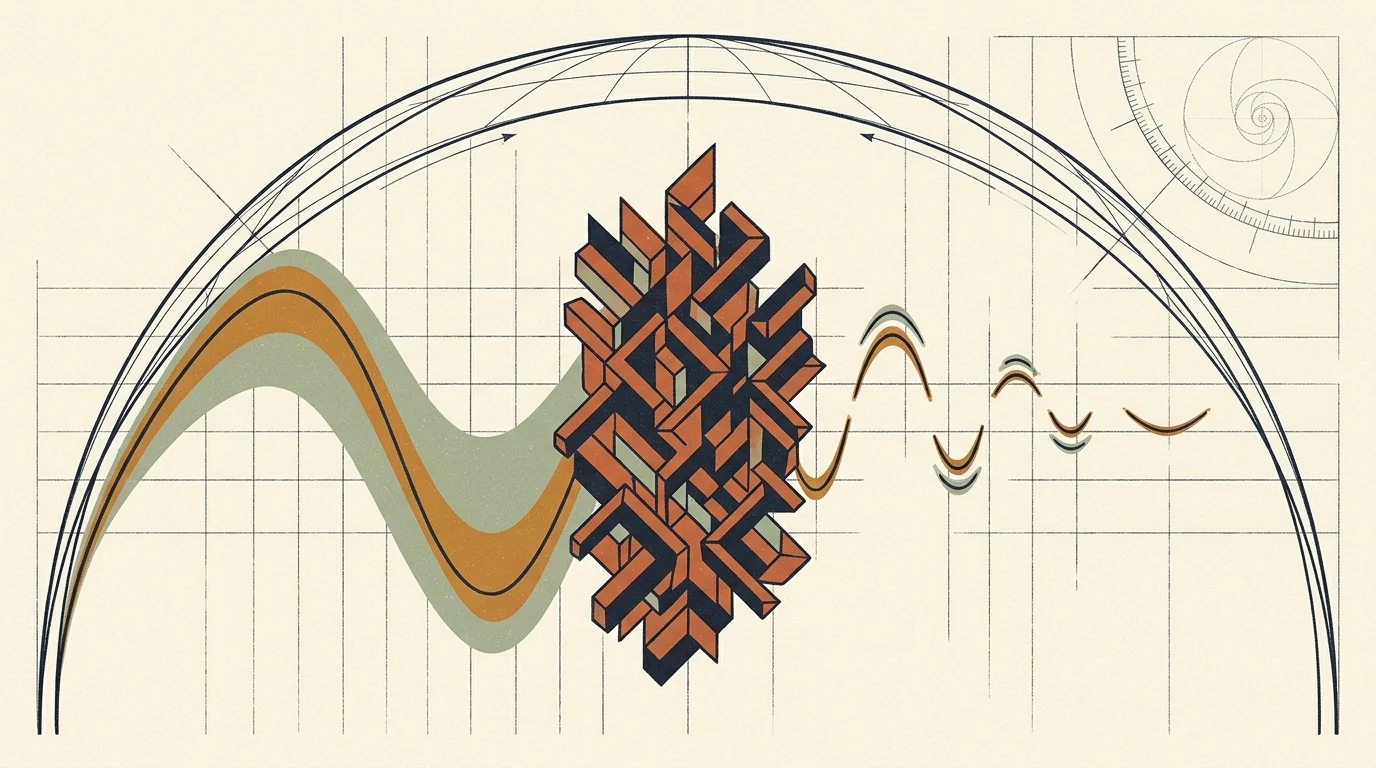
Researchers at UC Berkeley reveal that tau protein accumulation disrupts the sweeping bioelectric waves of deep sleep, fracturing overnight memory consolidation long before cognitive symptoms surface.
The physics of sleep and memory transfer
Every evening during deep non-REM sleep, the brain initiates a massive, synchronized bioelectric event. Thousands of neurons across the frontal cortex fire off and shut down together in orchestrated rhythm. These slow electrical waves normally cascade across broad regions of the brain like a unified ocean swell, traveling across distances comparable to the width of a hand on the scalp. This coordinated rhythm serves a vital neurophysiological purpose: it facilitates the transfer of short-term personal experiences from temporary storage into long-term neocortical networks.
This dynamic extends the foundational two-stage memory model proposed by neuroscientist György Buzsáki in 1989. Buzsáki demonstrated that memory trace formation relies on precise electrical coupling during slow-wave sleep to lock newly acquired experiences into permanent architecture. In healthy tissue, this sweeping electrical coherence clears the cellular slate while consolidating the day’s episodic events, such as remembering where you parked your car or recalling a recent conversation.
When this bioelectric wave propagation is compromised, the physiological bridge between short-term acquisition and long-term consolidation breaks down. The brain loses its capacity to synchronize far-flung neural populations, turning an organized nighttime archive process into fragmented, isolated signals.
Tau protein isolates the frontal cortex wave pattern
In a new study published in Nature Neuroscience, researchers at the University of California, Berkeley tracked this deep-sleep electrical dynamic across younger and older cohorts. Led by neuroscientist Omer Sharon and senior author Matthew Walker, the team evaluated healthy young adults in their 20s alongside older adults aged 60 to 75 using electroencephalography (EEG), positron emission tomography (PET) scans, and spinal fluid biomarkers.
The team discovered that in older adults with higher accumulations of tau—a pathological protein long linked with Alzheimer’s disease—the broad, sweeping slow waves fragmented. Instead of rolling continuously across wide swaths of the neocortex, the electrical waves traveled significantly shorter distances and appeared isolated. The researchers termed these disconnected electrical events ‘lonely waves.’
Critically, these lonely waves correlated directly with reduced overnight memory performance. Older participants presented with pairs of words in the evening showed a diminished capacity to recall those associations the following morning if their sleep was dominated by localized, uncoordinated slow waves. Crucially, these participants did not have clinical Alzheimer’s disease; their tau levels were subclinical, and their memory scores remained within normal age-adjusted ranges.
Mechanistic insights from bioelectric coherence to protein loading
The structural origin of these slow waves sits primarily within the frontal cortex. As tau protein accumulates in these frontal regions, it disrupts the neural connectomics required to generate widespread electrical synchronization. This breakdown was corroborated through independent spinal fluid analyses conducted with Washington University in St. Louis, where higher fluid ratios of tau to amyloid correlated directly with isolated, non-traveling sleep waves.
This physical failure mirrors broader principles in biophysics, such as those early field concepts explored by Harold Saxton Burr regarding bioelectric organizing matrices. When the structural substrate of the neocortex accumulates protein aggregates, the tissue loses its capacity to sustain large-scale bioelectric coherence across long spatial pathways.
Ancestral sleep patterns naturally evolved alongside uninterrupted circadian light-dark cycles, prioritizing unfragmented slow-wave sleep in the early hours of the night. Modern environmental disruptors and age-related protein loading degrade this fundamental biological phase, depriving the frontal cortex of the synchronized sweeps necessary for systemic neural maintenance.
Navigating uncertainty and protecting cognitive architecture
While these observations reveal a striking correlation between frontal tau loading, lonely slow waves, and fading episodic memory, a critical scientific question remains unresolved. Researchers cannot yet state whether accumulating tau directly causes the breakdown of traveling slow waves, whether disrupted sleep waves accelerate tau deposition, or if both are driven by an upstream, unmeasured metabolic shift.
Because PET scans and spinal taps are invasive or costly, tracking slow-wave propagation patterns via high-density EEG may eventually emerge as a non-invasive bioelectric marker for early, subclinical neurodegenerative shifts. Identifying the degradation of traveling waves long before clinical symptoms appear provides a novel temporal window for future interventions.
Protecting long-term cognitive health requires safeguarding deep non-REM sleep architecture. Prioritizing strict circadian alignment, minimizing night-time light exposure, and protecting deep sleep continuity remain key strategy pillars for supporting the brain’s natural bioelectric restoration dynamics.
Three things to remember
- Tau accumulation in the frontal cortex disrupts broad, traveling slow waves during deep non-REM sleep.
- Isolated ‘lonely waves’ cover shorter distances, impairing overnight episodic memory consolidation in older adults.
- These bioelectric disruptions occur in subclinical stages before any formal diagnosis of Alzheimer’s disease manifests.
Source
This analysis is based on Scientists discover mysterious “lonely” brain waves linked to memory loss from ScienceDaily Healthy Aging. Read the original report for full context.
Health note: This research establishes a strong observational link between tau buildup, fragmented sleep waves, and memory consolidation, but it does not prove causality or demonstrate that altering sleep wave patterns directly prevents cognitive decline.