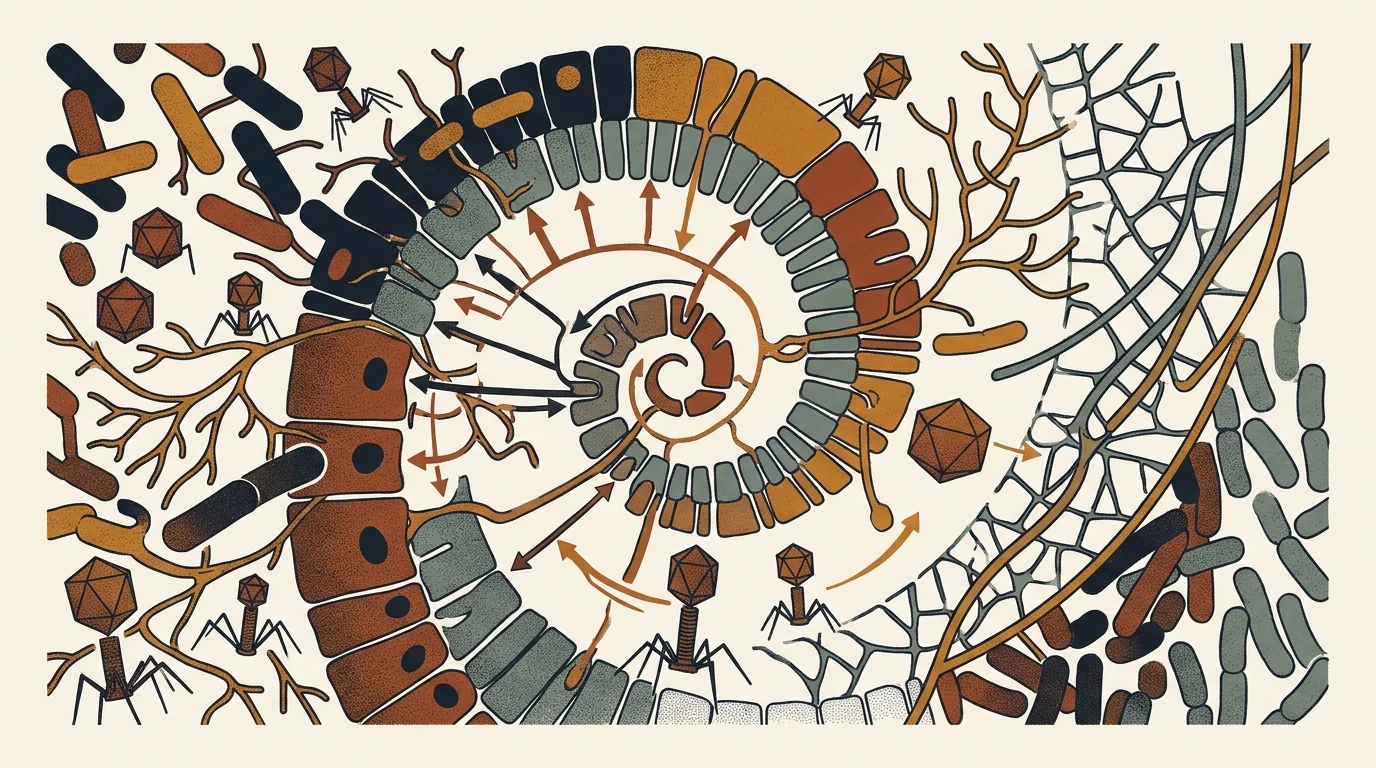
Immune aging and gut microbial shifts engage in a reciprocal dialogue across bacteria, fungi, and viruses, moving science past simplistic notions of dysbiosis.
Immunosenescence is not a uniform slide into decline, but rather a constellation of shifting hematopoietic outputs, altered immune-cell functions, and tissue-specific inflammatory states. In parallel, the trillions of organisms inhabiting the human intestinal tract undergo extensive ecological remodeling across the bacteriome, mycobiome, virome, and archaeome. Rather than settling into a singular, predictable aged profile, this microbial community fluctuates according to an individual health status, frailty, dietary patterns, and medication exposures. Mechanistically, age-related alterations in microbial metabolites and immunostimulatory products physically cross or interact with the intestinal epithelial barrier, directly altering local inflammatory tone, cellular metabolism, bone marrow hematopoiesis, and the functional states of both lymphoid and myeloid lineages.
Yet this cross-talk operates as a two-way street, because intrinsic immune and tissue aging actively reshape microbial ecology and functional capacity in return. This reciprocal loop reframes the gut microbiome from an autonomous, upstream puppet master of aging into a dynamic, modifiable cellular participant. Consequently, translational efforts must pivot away from the elusive goal of forcing an aged gut back into a youthful baseline, focusing instead on targeting specific microbial metabolites and host-response pathways that drive distinct aging phenotypes.
Key takeaways
- Multikingdom microbial remodeling spans bacteria, fungi, viruses, and archaea without converging on a single aged microbiome profile.
- Microbial metabolites and immunostimulatory molecules physically alter epithelial barriers, inflammatory signaling, and immune-cell metabolic states.
- Intrinsic host immune aging reciprocally reshapes intestinal ecology, proving the gut microbiome is a dynamic participant rather than an autonomous driver.
Source
Reported from Multikingdom gut microbiome and immune aging: A host-microbial signaling perspective. (PubMed).
Evidence note: Causal support remains heavily weighted toward selected bacterial mechanisms studied in experimental models, while aging-specific evidence for the mycobiome, virome, and archaeome is still severely limited.