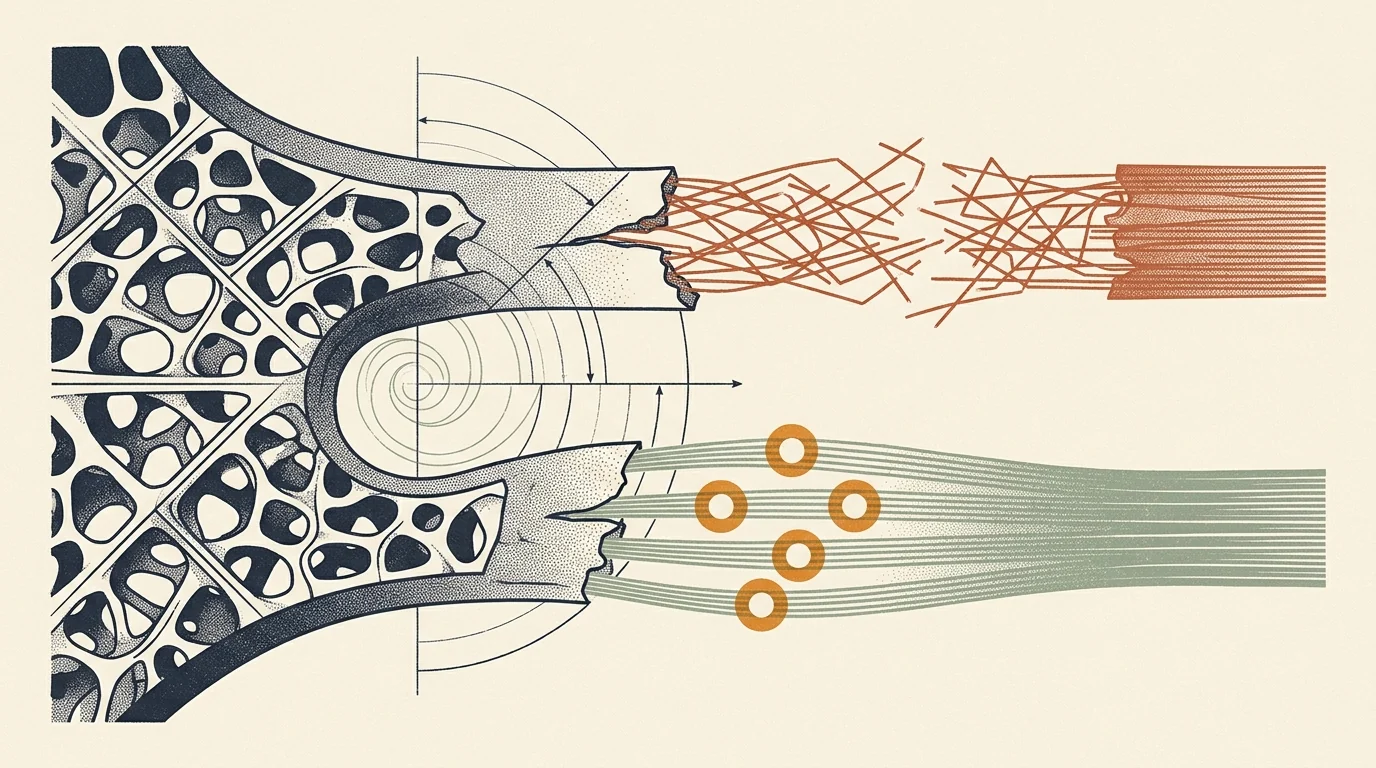
Human single-cell maps reveal why rotator cuff tears heal into stiff scar tissue rather than regenerating functional bone-tendon interfaces.
Surgical anchors can successfully pin a torn tendon back to bone, yet biological healing frequently fails to reconstruct the native graded enthesis. Instead of regenerating the specialized transition zone where tendon anchors into cartilage and bone, aging and metabolically stressed tissues deposit a weak fibrovascular scar. Recent human single-cell profiling maps this failure directly to the cellular neighborhood, identifying distinct pro-fibrotic macrophage populations, senescent tenocytes, and aberrant osteopontin-driven signaling pathways operating within the injury site. Rather than viewing inflammation as a simple enemy to be suppressed, researchers now recognize that the local immune microenvironment dictates whether an injury resolves into functional regeneration or degrades into persistent scar tissue.
Shifting the therapeutic target from broad anti-inflammatory suppression toward active resolution pathways requires addressing macrophage heterogeneity, efferocytosis, and immune-stromal crosstalk. Emerging biofabrication strategies seek to orchestrate these immune dynamics using responsive biomaterials, extracellular vesicles, and targeted senomorphic agents. However, these experimental approaches remain bounded by the complexities of aged and chronically degenerated tissues. Translating these mechanistic insights into durable clinical therapies demands rigorous validation in chronic disease models, alongside biomarker-driven patient selection protocols that account for preexisting muscle degeneration and poor bone quality.
Key takeaways
- Repaired tendons frequently heal through a disorganized fibrovascular scar rather than recreating the graded tendon-bone enthesis.
- Human single-cell analyses isolate specific pro-fibrotic macrophages, senescent tenocytes, and TGF-beta networks driving failed repair.
- Pro-resolution therapeutic designs target macrophage dynamics, efferocytosis, and cellular senescence rather than applying blanket anti-inflammatories.
Source
Reported from Immune microenvironment in rotator cuff healing: from macrophage dynamics to immunomodulatory regenerative therapies. (PubMed).
Evidence note: These insights stem from a literature review and single-cell expression analyses that still require robust causal validation across chronic, aged disease models and human clinical tissues.